

HILLEL INTERNATIONAL'S IMMERSIVE EXPERIENCE IN POLAND
Take your students on an unforgettable discovery of the richness
of the Jewish (hi)story in Poland
We encourage you to embark with us on this educational adventure through the treasures of Jewish-Polish heritage!
The Taube Center has provided tours for university and graduate students for more than a decade. It is a proud partner with Hillel International, offering deep-dive, immersive experiences in Jewish Poland, past and present.
Each tour is a collaboration between the Hillel staff and the Taube Center. We balance site visits, lectures, and workshops with educational and cultural activities.

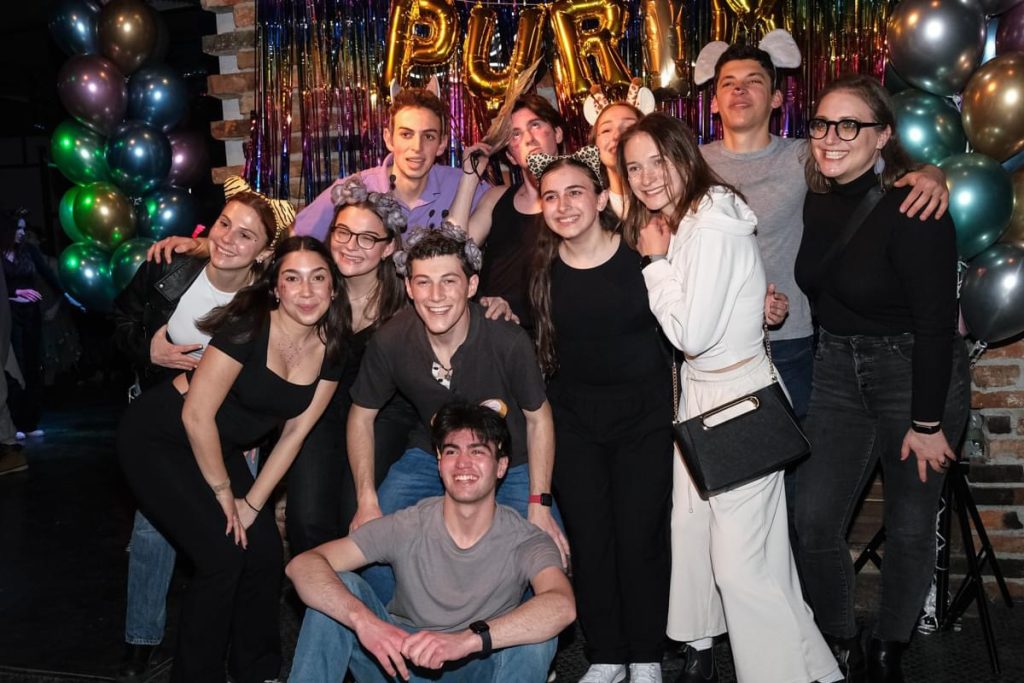
On the one hand, students will explore the complex and nuanced heritage of Poland’s Jewish past; on the other, they will visit local institutions, including JCCs and Hillels, to ensure a fulfilling and thought-provoking journey.
The tour addresses historical events, memorialization, and contemporary issues, engaging the students in debates and encouraging them to learn more about our common history and its impact on the world.
We hope that their experience will be later shared on campus and integrated into your campus’s activities.
SAMPLE ITINERARY
ARRIVALS: WARSAW
Met by Taube Center staff at the airport
Light lunch provided
Transfer to the hotel
Check-in, time to refresh
Welcome and orientation session at the hotel
Introductory guided walking tour of Warsaw’s Old Town
The Old Town was established in the 13th century with Jewish roots dating back to the 15th century. It was almost completely destroyed during WWII and recreated after the war. Warsaw’s Old Town has been placed on UNESCO’s list of World
Heritage Sites as “an outstanding example of a near-total reconstruction of a span of history covering the 13th to the 20th century”.
Group dinner in the Old Town
Overnight in Warsaw
WARSAW: WHY SHOULD WE LEARN ABOUT POLISH JEWISH HISTORY?
Breakfast at the Hotel
Framing the day session with Taube Center Staff & the group’s leader. Guided walk to the POLIN Museum of the History of Polish Jews
The Museum, situated on the plaza vis-a-vis the Warsaw Ghetto Heroes Memorial, creates a dynamic historical complex, which memorializes the past and honors 1,000 years of the Polish-Jewish co-existence. POLIN, with its eight-gallery core exhibition, has been internationally recognized and draws guests from Poland and around the world.
Audio-guided visit to the Core Exhibition with guide questions
Post-visit reflection session with Polin Museum staff
Lunch at the POLIN’s Restaurant
Guided walking tour of the former Warsaw Ghetto and its memorials Walk or tram to the Emanuel Ringelblum Jewish Historical Institute
The Institute, established in 1947, is the world’s largest repository of material Polish Jewish heritage. Among its thousands of publications, artifacts, and testimonies, are the treasured Emanuel Ringelblum Archives. The Institute’s core exhibition, “What We Were Unable to Shout Out to the World” is dedicated to the Underground Archive of the Warsaw Ghetto and its creators – the Oneg Shabbat group.
Visit the core exhibition What We’ve Been Unable to Shout out the World Wrap-up session at the Taube Center space
Dinner on your own (recommendations will be provided)
Overnight in Warsaw
WHO SHAPED JEWISH LIFE IN WARSAW?
Breakfast at the hotel
Framing the day session
Walk to Plac Grzybowski
Guided walking tour of a formerly middle-class neighborhood with a visit to the Nozyk Synagogue, which serves today’s Jewish community.
The Nozyk, an iconic symbol of the continuity of Jewish life in Poland’s capital, is the only synagogue in Warsaw to survive the Second World War and the communist period.
Van to Okopowa Jewish Cemetery
The Okopowa Street Jewish Cemetery, one of the largest Jewish cemeteries in Europe, was established in 1806. The cemetery reflects more than 200 years of Jewish life in Warsaw and contains over 250,000 graves. The site also includes the mass graves of the Warsaw Ghetto victims and a memorial to the members of Oneg Shabbat.
Guided walking tour of the cemetery
Van to Muranow
Lunch in a Milk Bar (Pol. Bar mleczny; Polish cafeteria that during the Communist era provided government-subsidized traditional Polish cuisine at low cost. The name comes from cheese cutlets, which were often sold when meat was rare) in Muranow
Guided walking tour of contemporary Warsaw including sites connected to social-realism architecture concluding at the 30th floor of the Palace of Culture and Science
Dinner at JCC Warsaw + meeting with local community representatives
Overnight in Warsaw
WARSwLTHE 11TH COMMANDMENT: THOU SHALT NOT BE INDIFFERENT
Breakfast at the hotel
Framing the day session at the hotel
Drive to Praga, the neighborhood on the right side of the Vistula River Tour of Jewish Praga
Lunch in Praga
Drive to Warsaw ZOO
Visit the Żabiński Villa, a safe haven for Jews during World War II
A modernist villa where director Jan Żabiński and his wife, Antonina, sheltered over 200 Jews seeking refuge during German Nazi occupation. Their story inspired the book and film: “The Zookeepers’ Wife”.
Museum of Polish Vodka + workshops with a mixologist
Koneser Vodka Factory produced the spirit from 1897 to 2007. The space was redeveloped in 2018, now it is a huge complex, which consists of 18 buildings, and includes plenty of bars and restaurants.
Van or coach back to the city center
Dinner with Hillel Warsaw
Overnight in Warsaw
JEWISH KRAKOW: PRESENCE OF ABSENCE; ABSENCE OF PRESENCE
Breakfast in the hotel
Check out
Load your luggage into the van. The luggage will be transferred directly to the hotel in Krakow.
Express Train to Krakow (2,5 hour ride)
Guided tour of Krakow’s Jewish quarter
Kazimierz is a historical district of Kraków, which for many centuries–has been the center of Jewish life in the city. With its seven surviving synagogues and a vibrant JCC, Kazimierz draws locals and tourists interested in exploring Jewish Krakow, past and present.
Lunch on your own in Kazimierz
Welcome to the Krakow session led by a local guide or scholar
Visit to the Galicia Jewish Museum followed by a discussion on maintaining memory/what are we responsible for and to whom.
The Galicia Jewish Museum, created in 2004, commemorates the victims of the Holocaust and celebrates the Jewish culture of Polish Galicia. The Museum is located in the heart of Kazimierz and is one of Poland’s most visited Jewish museums and cultural centers.
Dinner
Check-in
How and why do We Visit Auschwitz-Birkenau? Preparatory session at the
hotel Overnight in Krakow
AUSCHWITZ – BIRKENAU MEMORIAL AND MUSEUM
Early breakfast in the hotel
Departure to Auschwitz – Birkenau Memorial and Museum
Guided tour of Birkenau (with Auschwitz-Birkenau guide) –
Short break. Boxed lunch in the car park
The tour continues to the Auschwitz I Museum concluding with a visit to the “Shoah” exhibit in Block 27
Reflection session at the Auschwitz Jewish Center
Auschwitz Jewish Center was opened to honor Oświęcim’s former residents and teach future generations about the Holocaust. The facilities include a Jewish Museum, a Synagogue, an Educational Center, and a cafe. The memory of its Jewish population is preserved in the Chevra Lomdei Mishnayot Synagogue, the city’s only
surviving Jewish house of prayer, and Cafe Bergson, located in the house of the last Jewish resident.
Van to Krakow
Preparation for Shabbat in the hotel
Shabbat dinner at JCC Krakow
Overnight in Kraków
KRAKOW: THE ROYAL CITY
Breakfast in the hotel
Optional: Shabbat services or free morning – a list of recommendations will be provided
Lunch with Hillel Krakow
Guided tour of Old Town
Krakow Old Town contains some of the most breathtaking medieval architectural gems in all of Europe. A prime example of that is The Wawel Royal Castle, which was the political and cultural heart of Poland until the end of the 16th century. Another noteworthy site is Collegium Maius, established in 1364 as part of The Jagiellonian University; one of the oldest academic institutions in the world. We also have to mention the Main Market Square, a staple of Krakow’s architecture and one of the largest medieval town squares in Europe, with a beautiful Cloth Hall standing in its center.
Free time to explore Krakow – list of recommendations will be provided Havdalah at the river bank
Farewell Dinner
Overnight in Krakow
KRAKOW: DEPARTURES
Breakfast in the hotel
Check out, and load luggage onto the van/coach
Optional visits to one of Krakow’s many museums or explore the city on your ow
Wrap-up session in Planty, the former border of the ancient Old Town, now the largest public park in Krakow
Depending on the weather, the wrap-up session will be held either outdoors or indoors.
Light lunch
Departure to the airport
Departure to the USA
SAMPLE ITINERARY
ARRIVALS: KRAKOW
Met by Taube Center staff at the airport
Light lunch provided
Transfer to the hotel
Check-in, time to refresh
Welcome session and orientation at the hotel
Tram to the Old Town
Guided walking tour around the Old Town
Krakow Old Town contains some of the most breathtaking medieval architectural gems in all of Europe. A prime example of that is The Wawel Royal Castle, which was the political and cultural heart of Poland until the end of the 16th century. Another noteworthy site is Collegium Maius, established in 1364 as part of The Jagiellonian University; one of the oldest academic institutions in the world. We also have to mention the Main Market Square, a staple of Krakow’s architecture and one of the largest medieval town squares in Europe, with a beautiful Cloth Hall standing in its center.
Welcome Dinner
Tram back to the hotel
Overnight in Krakow
KROKE: THE JEWISH KRAKOW
Breakfast at the hotel
Framing the day session
Guided walking tour of Kazimierz, the historical Jewish quarter, including a visit to several out of 7 synagogues and the Remuh cemetery
Lunch at JCC Krakow with JCC representative and JDC fellow, discussion on Ukraine aid relief efforts
Walk to the Galicia Jewish Museum with a brief tour of the exhibition and session: Museums as Memory Holders
The Galicia Jewish Museum, created in 2004, commemorates the victims of the Holocaust and celebrates the Jewish culture of Polish Galicia. The Museum is located in the heart of Kazimierz and is one of Poland’s most visited Jewish museums and cultural centers.
Walk to Podgórze, a former ghetto area, followed by a guided tour
Pierogi Workshop Dinner with Hillel Krakow (TBC including Hillel Krakow director Mariia Herhshova)
Wrap-up session at the hotel and preparation for the visit to Auschwitz-Birkenau
Overnight in Krakow
MEMORIAL AND MUSEUM AUSCHWITZ–BIRKENAU
Early breakfast at the hotel
Departure via coach (an approx. 90-minute drive)
Study tour of Auschwitz I Museum concluded with a visit to the “Shoah” exhibit at Block 27, curated by Yad Vashem
Short break (boxed lunch provided)
The tour continues to Auschwitz II Birkenau
Short visit to the Auschwitz Jewish Center
Auschwitz Jewish Center was opened to honor Oświęcim’s former residents and teach future generations about the Holocaust. The facilities include a Jewish Museum, a Synagogue, an Educational Center, and a cafe. The memory of its Jewish population is preserved in the Chevra Lomdei Mishnayot Synagogue, the city’s only surviving Jewish house of prayer, and Cafe Bergson, located in the house of the last Jewish resident.
Coffee break at the Bergson café at the AJC and debrief session
Return to Krakow
Dinner and evening on your own
Overnight in Krakow
KRAKÓW – ŁODŹ – WARSAW
Early breakfast in the hotel
Early departure via van to Lodz and arrival in Lodz (approx. 4-hour drive), framing and introduction to Łódź in the bus
Guided tour through Jewish Cemetery in Lodz
LODZ – Once known for its booming textile industry and considered the Manchester of the East, Lodz was an industrial “promised land” of opportunities for Poles, Jews, Germans, and Russians in the 19th century. Today, the city is searching for its new character and identity after the fall of Communism and the resurgence of Capitalism in a new form. The city’s center, which survived WW2 mostly unscathed, is filled with eclectic architecture of industrial moguls’ palaces and villas located right next to vast complexes of textile factories. The most impressive are the former homes of the Poznanski and Scheibler families with bourgeois edifices of the Belle Époque period as well as the vast areas of tenement housing for the working class, and adjacent factory buildings. The center of Lodz is becoming the major area of revitalization in Poland and one of the biggest within the EU.
Lunch on your own in Manufaktura
Guided walking tour of Jewish Lodz
Departure to Warsaw (approx. 2hs)
Arrival in Warsaw
Check-in, time to refresh
Dinner
Overnight in Warsaw
WHY SHOULD WE LEARN ABOUT POLISH JEWISH HISTORY?
Breakfast at the hotel
Morning briefing and meeting with Konstanty Gebert (TBC)
Walk to the POLIN Museum of the History of Polish Jews
The Museum, situated on the plaza vis-a-vis the Warsaw Ghetto Uprising Memorial, creates a dynamic historical complex, that memorializes the past and honors 1,000 years of the Polish-Jewish co-existence. POLIN, with its eight-gallery core exhibition, has been internationally recognized and draws guests from Poland and around the world.
Audio-guided visit to the Core Exhibition
Reflection session with Zachary Mazur
Zachary Mazur earned his Ph.D. in history at Yale University where he wrote a dissertation on the formation of interwar Poland through the lens of state finance. He is a Senior Historian at the Museum of the History of Polish Jews POLIN and a lecturer at the Polish Academy of Sciences Doctoral School Anthropos. He also has a podcast called NextGen Humanities, which is available on Apple Podcasts and Spotify.
Optional: visit the temporary exhibition “TBC”
Buffet lunch at POLIN’s Restaurant
Guided walking tour through the former Warsaw Ghetto concluding at the Umschlagplatz Monument.
The monument commemorates the 300,000 Jews deported from the Warsaw Ghetto to Treblinka in 1942.
Walk or tram to the Emanuel Ringelblum Jewish Historical Institute
The Institute, established in 1947, is the world’s largest repository of material Polish Jewish heritage. Among its thousands of publications, artifacts, and testimonies, are the treasured Emanuel Ringelblum Archives. The Institute’s core exhibition, “What We Were Unable to Shout Out to the World” is dedicated to the Underground Archive of the Warsaw Ghetto and its creators – the Oneg Shabbat group.
Visit the core exhibition What We’ve Been Unable to Shout Out to the World
“What we were unable to Shout Out to the World” is an exhibition dedicated to the Underground Archive of the Warsaw Ghetto and its creators – the Oneg Shabbat group.
Wrap-up session at the Taube Center space (suggested session: Individualized memory representation)
Dinner on your own
Overnight in Warsaw
THE 11TH COMMANDMENT: THOU SHALT NOT BE INDIFFERENT
Breakfast at the hotel
Van to Okopowa Jewish Cemetery
The Okopowa Street Jewish Cemetery, one of the largest Jewish cemeteries in Europe, was established in 1806. The cemetery reflects more than 200 years of Jewish life in Warsaw and contains over 250,000 graves. The site also includes mass graves of the Warsaw Ghetto victims. Recently, 21 gravestones originally created by Abraham Ostrzega, a well-known Jewish sculptor, have been restored.
Guided walking tour through the Okopowa Jewish Cemetery, matzevot reading workshop
Drive to Praga, the district of Warsaw on the right side of the Vistula River
Visit the Żabiński Villa, a safe haven for Jews during World War II
A modernist villa where director Jan Żabiński and his wife, Antonina, sheltered over 200 Jews seeking refuge during German Nazi occupation. Their story inspired the book and film: “The Zookeepers’ Wife”.
Lunch in Praga, meeting with LGBTQIAP+ activists on the current situation of the LGBT community in Poland
Drive back to the hotel; time to refresh and prepare for Shabbat
Shabbat candle lighting
Briefing with rabbi Shai Welfeld or Michael Schudrich (TBC)
Shabbat Service at Nozyk Synagogue
Warsaw’s only synagogue to have survived WWII and endured decades of Communism, the Nozyk Synagogue, is an iconic symbol of Jewish presence in Warsaw that serves the local community to this day.
Dinner at JCC Warsaw with Hillel Warsaw students and community members
Overnight in Warsaw
WARSAW: SHABBAT
Breakfast at the hotel
Free morning/Optional Shabbat services
Recommendations for activities in Warsaw will be provided
Lunch at Taube Center Space with Helise Lieberman, Director, Taube Center for Jewish Life & Learning
Guided walking tour of Warsaw’s Old Town (suggested: Treasure Hunt with Hillel Warsaw students)
Dinner in the Old Town followed by Havdalah
Overnight in Warsaw
Early breakfast in the hotel
Check out
Load the coach
Royal Castle and Warsaw skyline view from 30th floor of Palace of Culture and Science
Departure to the Chopin Airport
Meet Your Tour Manager:
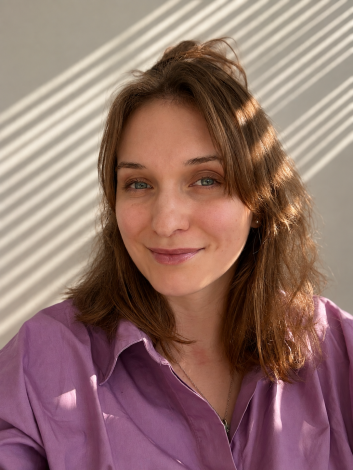
Zofia Szabat is the Hillel and Student Trips Coordinator at the Taube Center. Born and raised in Warsaw, she previously interned at Hillel Warsaw and spent a semester studying abroad at the University of Haifa. She holds a BA in Sociology from the University of Warsaw and is currently completing her MA thesis on tour guides navigating dark tourism and difficult heritage.
In 2023, she coordinated the first Polish edition of the European Days of Jewish Culture. Following the program’s success, she transitioned into tour coordination. Her professional interests include cultural programming, community engagement, and contemporary Jewish life.
In her free time, she enjoys running and volunteering as a sailing referee. An aspiring triathlete, she humorously describes herself as a “low-performance, high-maintenance athlete,” reflecting her commitment to staying active, even if her athletic ambitions sometimes outpace her results.