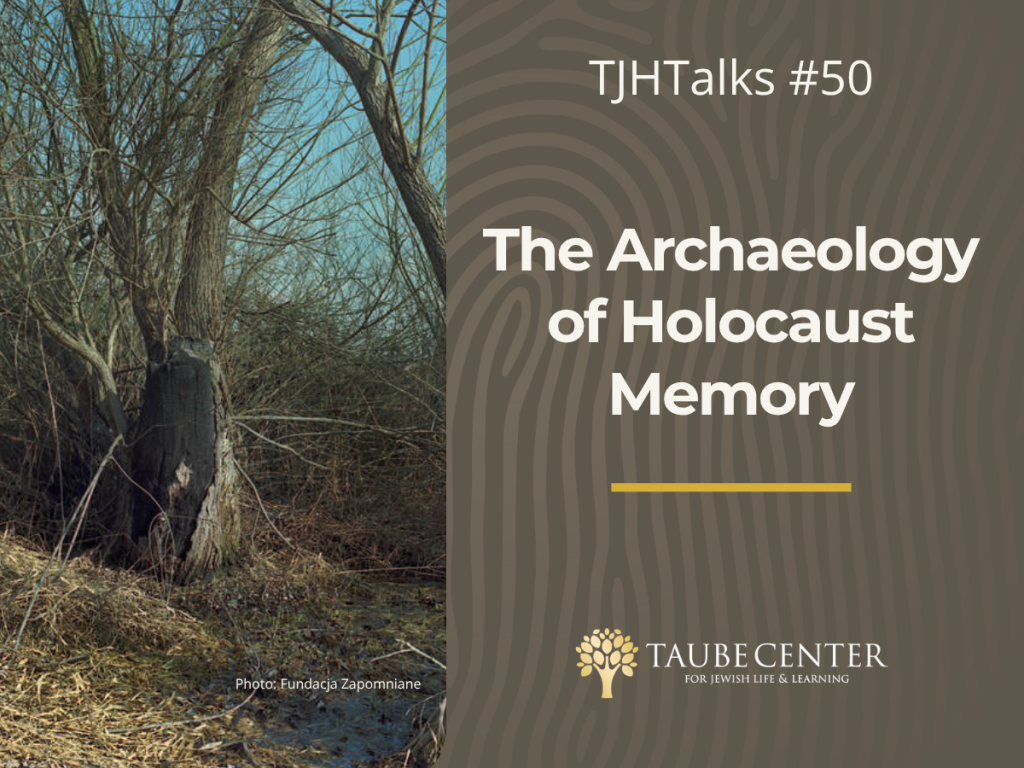
How do we remember the Holocaust in places where little or nothing visibly remains?
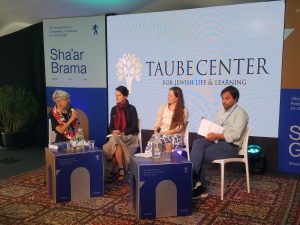
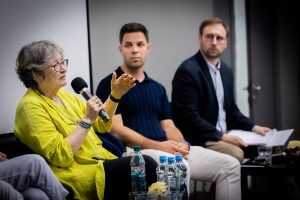
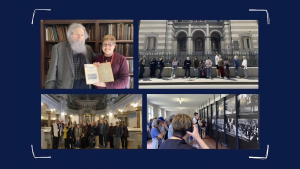
In this TJHTalks conversation, three leading scholars explore how landscapes, architecture, and buried traces can become sources of knowledge, commemoration, and responsibility. Moving beyond traditional monuments and museums, the discussion focuses on “non-sites of memory” — woods, fields, ruined structures, and urban spaces where evidence of the Holocaust is hidden.
Watch the full recording on YouTube:
With:
Professor Caroline Sturdy Colls
University of Huddersfield
Dr. Aleksandra Janus
President, Zapomniane Foundation
Dr. Natalia Romik
Architect, author, and researcher
In conversation with
Helise Lieberman
Director, Taube Center for Jewish Life & Learning
This conversation offers a powerful reflection on how we engage with difficult pasts — and how memory can be preserved even in the absence of visible marker